
Choose one primary Christmas restaurant offer, such as a specific dinner service or a take-home meal, and build the promotion around its actual capacity. Show the menu, price details, dates and booking conditions. Send ads to a page where guests can complete that exact reservation or order, then measure confirmed business rather than menu clicks.
Should you promote dining, takeout or a holiday event?
Start with the opportunity the kitchen and floor team can support. A dining promotion depends on available tables, seating times and service pace. A take-home menu depends on preparation, packaging and collection slots. A ticketed evening requires clear event details and entry terms. Combining them into one vague “Christmas at our restaurant” ad makes the guest do extra work.
A useful promotion might present a seasonal set menu, a family meal for collection, or a quieter service with genuine availability. It does not have to be a discount. Give the guest a concrete reason to choose you and enough information to decide whether the experience fits.
This guide concerns individual dining and food orders. Private corporate gatherings need a different enquiry process; see the holiday party venue guide for room, date and guest-count qualification.
What belongs on the Christmas dining page?
Publish the menu in readable HTML, with a downloadable version only as an additional option. Explain what the stated price includes, any optional additions, the dates offered and relevant party-size limits. Provide a way to ask about dietary requirements without promising that every request can be accommodated.
Show the reservation action near the menu and explain deposit or cancellation terms before commitment. If your system accepts requests rather than instant bookings, say so. A guest should not leave assuming a table is confirmed when the restaurant still needs to check availability.
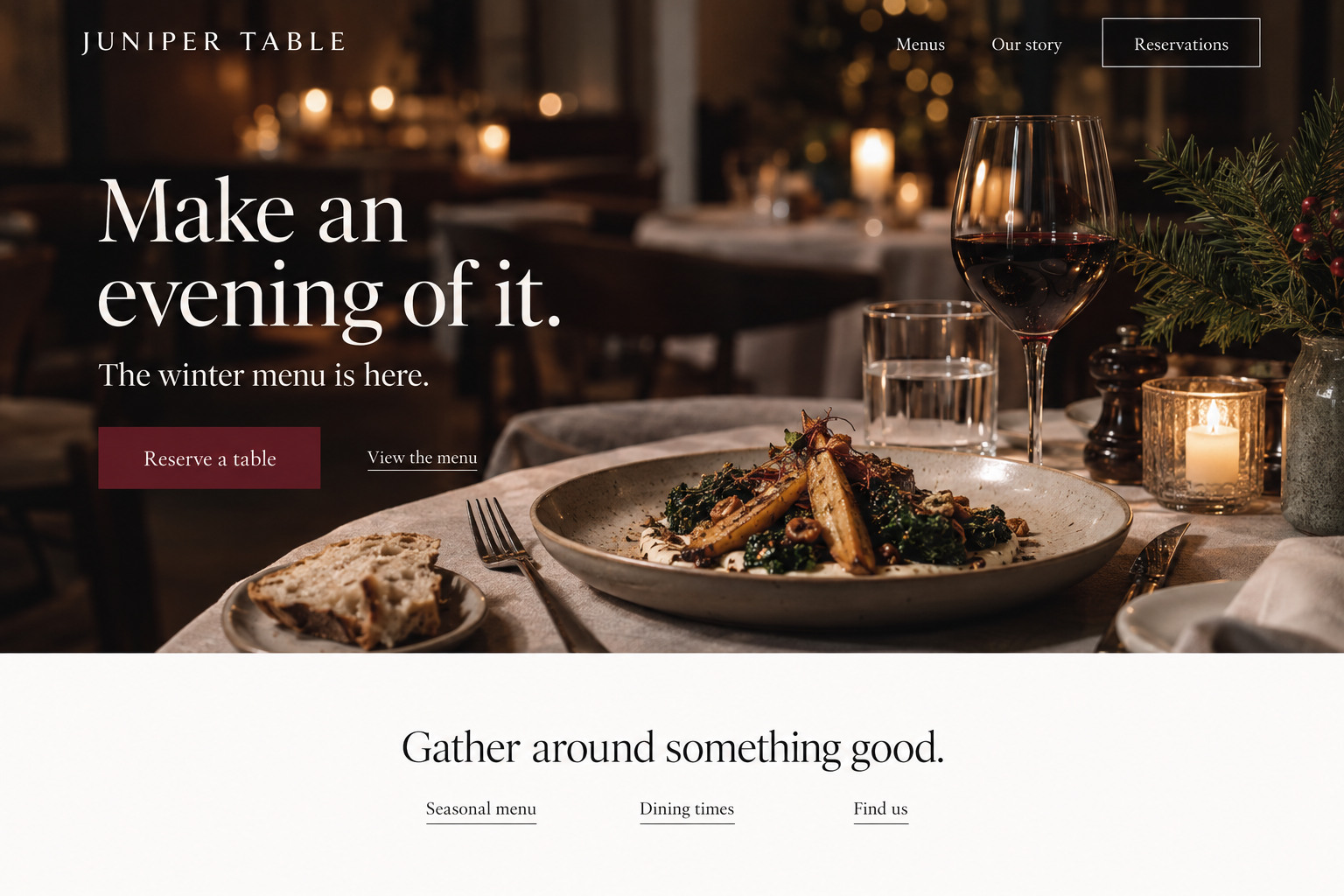
The Juniper Table concept shows the feeling of a winter dinner while keeping the menu and reservation visible. A real restaurant should use accurate room and dish photography. Do not let a beautiful sample table setting imply decorations, views or inclusions guests will not receive.
For a Fresno restaurant, show the actual address, parking information if verified, and any changed holiday hours. Google supports special holiday hours; update the profile as well as the page.
How do you keep the offer inside kitchen capacity?
Agree on the bookable services and table allocations with the team that will run them. Check kitchen output as well as seats. A dining room with open tables may still have a preparation or staffing constraint.
An operating brief to complete with your team
- Which dates and seating times are being promoted?
- Which party sizes can book online?
- Who updates availability and handles special requests?
- When must the menu or promotion stop accepting orders?
- Who checks the booking and payment confirmation?
For takeout, define the meal's serving size, reheating information, collection window and order cutoff. If collection is full, stop promoting it. A waitlist should never appear to be a completed food order.
How should restaurant Christmas ads connect to the offer?
Match the advertisement to a real service. Search terms such as “Christmas dinner restaurant” may reflect a specific date, location and dining need. Check whether your business is open on the date the customer expects. Christmas Eve, Christmas Day and December weekends are different offers.
Fictional copy example: “Settle in for a winter dinner at Juniper Table. View the seasonal menu and available December reservations.”
Use a page that answers those same questions. If the ad shows a particular dish, include it only while that dish is part of the advertised offer. Social creative can show the setting and meal; a short caption should still explain how to book.
Choose the local area based on the journey diners realistically make to your restaurant. Avoid filling the page with nearby city names or publishing identical menus on multiple location-keyword pages.
What counts as a successful restaurant promotion?
Separate reservation starts from confirmations, and confirmations from seated parties. For takeout, follow paid orders through collection and refunds. Keep walk-ins and repeat guests visible in the business report rather than assigning every December sale to advertising.
Ask why bookings fail: no suitable time, unclear menu, unexpected terms or a broken reservation handoff require different fixes. Check the complete journey on a phone, including the third-party booking provider. A click on “Reserve” is not proof that a guest can finish.
AMÁRQUEZ can build a focused restaurant landing page, connect search advertising to the right offer, and create social campaigns around the actual experience. Bring the approved menu and service capacity so the campaign starts with what your team can deliver.