
Start with the attraction’s real safe capacity by date and time, then compare it with paid tickets, holds, staffing, and the minimum contribution each booking must leave. Promote only sessions with verified sellable inventory. Try a value-added offer or a carefully bounded price for quieter times when the numbers work, then review the live campaign and pause or redirect ads as a session fills. A discount is not a demand plan if it sells tickets the event cannot deliver or cuts below its economics.
“Quieter” should be established from the operator’s own sales pace, past attendance, and current booking curve.
What inventory can you actually sell?
For each session, identify the operator-approved maximum sellable attendance and subtract existing paid orders and holds that must be honored. Reserve space for operational needs, staff, accessibility arrangements, comps, and the buffer the operator determines. Treat ticket-platform inventory as the source of truth only after someone verifies it stays synchronized with the actual operating limit.
Capacity may change with staffing, weather plans, parking, timed-entry throughput, performer coverage, or the physical layout. The operator sets the limit and confirms any change. Marketing should not infer a safe limit from ticket sales or use a discount to push past it. If two sessions share staff or facilities, account for that overlap before offering more inventory.
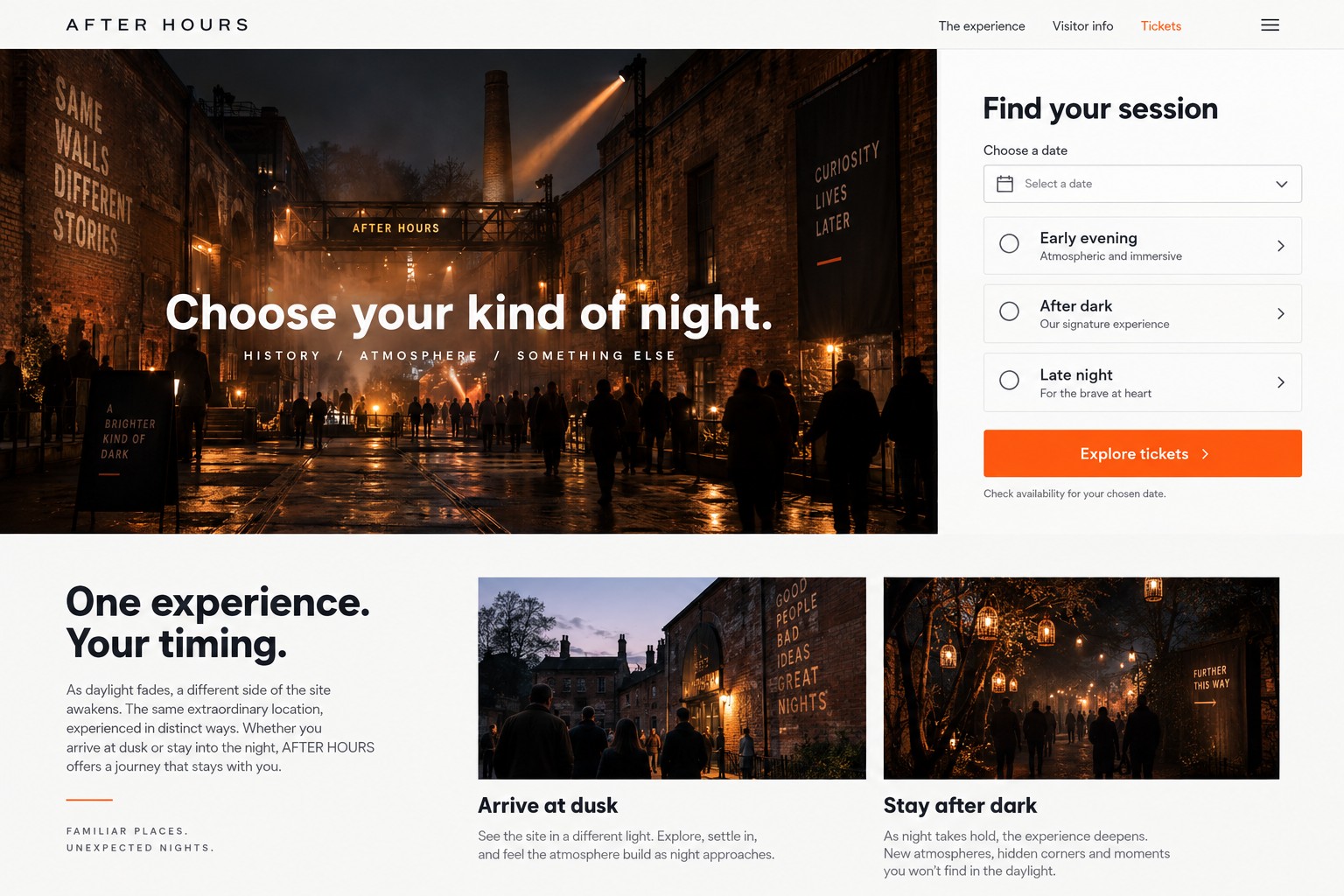
Fictional worked example: After Hours
The following numbers are invented for illustration, not a recommendation or real attraction result. Suppose the operator has approved a maximum of 100 tickets for each of four sessions. At the start of a planning check, the fictional ticket system shows 78 tickets sold for Friday evening, 91 for Saturday evening, 36 for Thursday evening, and 29 for Sunday afternoon. Before advertising, the operator verifies there are no outstanding holds or operational changes.
The arithmetic suggests 22, 9, 64, and 71 tickets remain within those stated limits. It does not mean the operator should sell every remaining place. The attraction may reserve some inventory or stop earlier based on staffing or experience quality. The useful next step is to decide which quieter sessions can accept more guests and how many, then set those limits in the ticket system and the campaign destination.
Should a quieter session cost less?
Compare the ticket’s contribution after variable costs with the operator’s minimum required contribution. Include costs that move with attendance, such as ticketing charges, per-guest materials, and variable labor where applicable. Account for discounts, bundled extras, refunds, and taxes with the operator or finance lead. A lower advertised price may be sensible if it still meets the approved floor and reaches buyers likely to choose a quieter time. If a lower base price would miss the floor, do not promote it. Consider a different offer only when its full cost is known and the combined sale still meets the approved contribution floor, or use content that explains the session without changing its price.
Keep the offer easy to understand. A quieter Sunday session could have a date-specific price only if it meets the approved contribution floor. The business should test one change at a time where possible and compare paid tickets, net contribution, cancellations, and attendance by session. Do not present a fictional offer as a result, and do not claim that scarcity or a price change guarantees demand.
Show the total ticket price, applicable charges, and what is included clearly before the guest pays. Coordinate the displayed price with the ticket provider so the page and checkout present the same offer.
How should advertising respond as sessions fill?
Give each date or session a destination that displays its current offer and availability. In Google Ads, separate campaigns or ad groups only when that gives you useful control over budgets, locations, messages, or reporting. Link search intent to the matching session page, check search terms, and review actual paid bookings and contribution rather than judging success from clicks alone. Google Ads lets an advertiser choose days and times for ads to be eligible, and provides controls to pause campaigns. These are delivery controls, not a guarantee that ad demand will shift neatly to the dates you prefer.
For social media, show a true preview of the experience and state which dates have room. Use organic posts to explain the difference between sessions or share operator-approved features; use paid promotion to reach relevant audiences for the specific open dates. Remove or update an offer as soon as it expires or inventory changes. Avoid “almost sold out” claims unless the current inventory supports them.
Set written stop rules before the campaign starts:
- Pause promotion for a session when it reaches the operator’s sellable limit or the ticket page no longer confirms availability.
- Stop a discount when its end date arrives, the allocated offer inventory is gone, or the remaining contribution falls below the operator-approved floor.
- Pause the affected ads if checkout or purchase reporting breaks, the displayed price is wrong, or the booking page cannot complete an order.
- Reduce or pause spend when the remaining inventory cannot reasonably support the campaign’s target acquisition cost, as calculated from the operator’s contribution and booking data.
- Move promotion only after the alternative session’s inventory, price, landing page, and operating details are checked.
Review availability and campaign destinations daily during a short seasonal campaign, so sellouts, broken links, or price changes are corrected promptly.
How can AMÁRQUEZ support the campaign?
AMÁRQUEZ can help map session offers to clear landing pages, create or refine Google Ads and social promotion, and make sure the visitor can find the date and price being advertised. Start with web design, Google Ads, or social media. To discuss a seasonal campaign, contact AMÁRQUEZ and share your website, campaign dates, ticket platform, verified session limits, and the dates with room. The operator remains the authority on capacity, policies, ticket terms, and final pricing.
Quieter-session FAQs
How do I choose which Halloween date to discount?
Use your own booking pace and verified remaining capacity to identify a date with room. Check contribution after variable costs and get approval for the offer before publishing it.
Can Google Ads target specific days or hours?
Google Ads offers ad scheduling so a campaign can be eligible on selected days and times. Use it as a delivery control and review results in your account; it does not guarantee sales for a chosen session.