
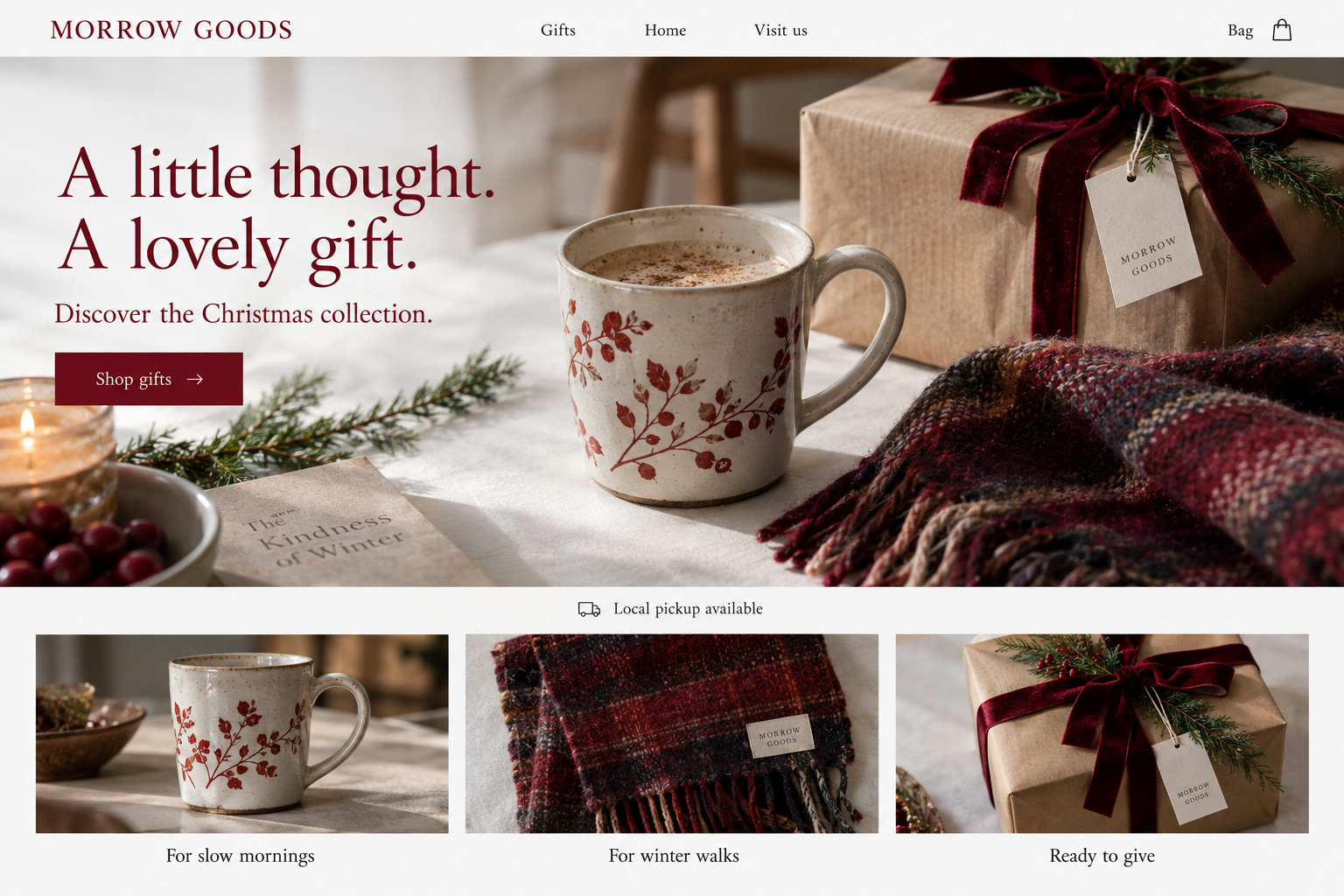
For a small retailer, start Christmas Facebook ads with a specific, available gift and a product page that explains price, contents and fulfillment. Set an affordable acquisition cost using your own margin, then judge the campaign by completed orders and their contribution. A seasonal image earns attention; a clear buying decision gives that attention somewhere to go.
Which Christmas offer should you advertise first?
Pick the product you can confidently sell and fulfill. A gift set with enough stock, straightforward packaging and a reliable collection process may be a better campaign candidate than your most photogenic item. Check whether the advertised variant is available and whether the team can assemble the promised quantity.
Write an offer brief before making the creative: the buyer, the gift occasion, the exact contents, the price, the available stock and the last realistic fulfillment date. If a bundle saves money, verify that comparison. If wrapping costs extra, show it. Your Christmas promotion should still make sense when a customer reads the details.
Separate shipped orders from local pickup when they have different deadlines. A Fresno shop might switch its message to collection after its shipping window closes. That is a change in service, not permission to invent a last-chance countdown.
What should a Christmas Facebook ad show?
Use actual product photography in the customer's context: the opened gift, its scale in a hand, or its complete contents on a table. Show wrapping as a separate detail if it is included. Keep the main message understandable without relying on a long caption or tiny text in the image.
Test two reasons to buy the same product before changing the product, audience and page all at once. One creative might explain the recipient fit; another might demonstrate convenient local collection. This makes it easier to understand what changed. Use the platform's current placement previews to check crops and legibility before launch.
Fictional copy example: “A thoughtful gift, ready to collect. Explore Morrow Goods' Christmas gift sets and choose an available pickup time.”
This example only works if the shop offers those sets and its checkout actually supports collection. Replace the fictional brand and promise with verified business details.
Where should the ad send the shopper?
Send a product-specific ad to that product or a tightly matched collection. Keep the photograph, offer and price consistent. The first screen should answer what the buyer gets and how to buy it; the product details should answer size, materials, contents, returns and fulfillment questions.
The Morrow Goods concept illustrates a small, edited gift collection rather than an endless sale catalogue. A real build needs accurate stock and checkout behavior behind the design. Use descriptive product names in visible text, not only inside a promotional image, so people and search systems can understand the offer.
Shipping promises require more than a carrier's transit estimate. Google Merchant Center's delivery guidance includes order cutoff, handling and transit time. Check your actual workflow before promising an arrival date. Read Google's delivery-time guidance.
How much can you afford to spend per order?
Work backward from what remains after the sale's variable costs. Include the product, packaging, payment fees, shipping subsidy and an allowance for expected returns. Decide how much contribution must remain for overhead and profit before allocating the rest to advertising.
Illustrative arithmetic, not a benchmark
$25 contribution before advertising
minus $10 required contribution
equals $15 maximum media cost per order.
If the campaign also incurs creative or agency fees, account for those separately when judging total profitability. A $15 media allowance is not a recommended cost per click, a promised result or a budget for every retailer. Use your own costs and examine whether first-time and repeat orders have different economics.
What should you review during the Christmas campaign?
Check stock, fulfillment promises and order errors daily while the offer is running. Compare paid orders with cancellations, refunds and the products actually sold. Reconcile the advertising report with the store's order records; attributed orders and total store orders answer different questions.
A failed checkout needs fixing before a larger budget. An offer attracting clicks but few carts may need clearer product detail. A popular product nearing its stock limit needs a campaign adjustment. Decide which situation you have before changing everything.
AMÁRQUEZ can connect paid social creative, a focused retail landing page and purchase measurement. Bring us the products, real margins and fulfillment limits. For wider planning, read our holiday advertising budget guide.