
What does HVAC SEO include?
HVAC SEO helps customers find the heating and cooling services you actually offer. We review website accessibility, service content, internal links and Google Business Profile information, then prioritize the gaps affecting your chosen services.
Repair, replacement and maintenance searches need different answers. We shape pages around equipment and work you handle, genuine project evidence, service coverage and the next step. Seasonal priorities can change, so reporting should keep service demand and booked work visible alongside rankings.
The Central Valley HVAC case study separates SEO leads and attributed revenue from advertising results. Use that evidence to understand the measurement approach, rather than as a prediction for another business.
Explore our SEO services to see how we review and measure the work.
Which HVAC jobs should your marketing bring in?
Start with the work you want to book and the capacity to deliver it. An emergency repair, a maintenance visit and a replacement-system estimate call for different information and follow-up.
A useful marketing brief makes those differences explicit:
- Repair calls: which faults and equipment do you handle, where can you travel, and when can someone answer? Advertise emergency availability only when the business actually provides it.
- Replacement and installation: what does an estimate involve, which systems do you install, and what approved project evidence can help someone evaluate the choice?
- Maintenance: which services are included, who is eligible, and how should an existing customer arrange the next visit?
- Capacity and coverage: which areas and job types are worth promoting now? A campaign should reflect the business you can serve, including busy periods and quieter weeks.
This gives the website and campaigns a shared job to do. It also gives the office a practical definition of a worthwhile enquiry.
How do SEO, Google Ads and the website work together?
The website explains the service and next step; search visibility and advertising help people reach that information. The mix should follow the business problem rather than a fixed package of channels.
Useful pages for the services you actually offer
A repair page should answer a homeowner's immediate questions about coverage, availability and contacting the company. An installation page can explain the assessment and show genuine completed work. Keep financing, credentials and availability accurate rather than relying on generic HVAC copy. Explore our website design service.
Local and organic search
Accurate business information, accessible service pages and relevant local evidence give people a clearer way to understand the company. Judge visibility for the services and locations you can serve. A single search near the office does not describe the whole service area. See our SEO work and how to read a local ranking grid.
Paid search and Local Services Ads
Paid campaigns need a defined service, area, budget and enquiry path. Compare the resulting opportunities with the jobs you wanted to attract. Where Local Services Ads are available and the business meets the applicable requirements, report that channel separately from Google Ads so its costs and outcomes remain clear.
Our Google Ads service covers campaign and landing-page decisions. The SEO versus Google Ads guide can help frame which problem to address first.
What did one Central Valley HVAC report show?
A Central Valley HVAC company's January-to-October report recorded 997 leads, $78,133.17 in listed marketing spend and $802,811 in attributed revenue across three channels. The source does not state the year.
The campaign account describes a new website, SEO, Google Ads and Local Services Ads, with CallRail connected to Housecall Pro to relate enquiries to revenue. The channel comparison is useful because the largest lead count and largest revenue total came from different channels.
| Channel | Reported leads | Listed spend | Attributed revenue |
|---|---|---|---|
| Google Ads | 231 | $37,403.34 | $299,431 |
| Local Services Ads | 281 | $15,729.83 | $262,380 |
| SEO | 485 | $25,000.00 | $241,000 |
| Total | 997 | $78,133.17 | $802,811 |
SEO recorded the most leads; Google Ads recorded the most attributed revenue. Neither observation alone tells you which channel would be most profitable for another HVAC company.
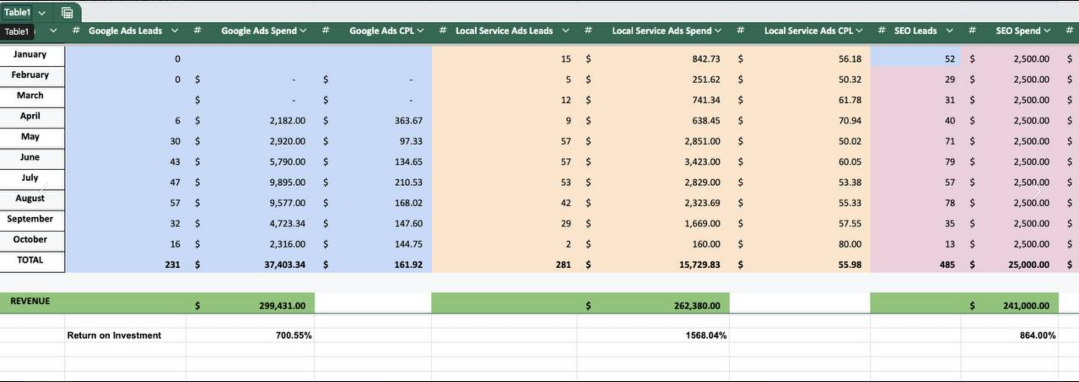
Source: AMÁRQUEZ's supplied campaign account and HVAC channel report. These are reported leads and attributed revenue, not confirmed unique customers or a controlled measure of additional sales. Revenue divided by listed spend is 10.27 times; that calculation excludes labour, materials, overhead and other business costs.
How should an HVAC business measure progress?
Follow enquiries through to the outcome recorded by the business. A form submission or connected call is a starting point; it is not automatically a booked job or a new customer.
- Record the enquiry: source, date, requested service and location, with a consistent way to identify repeat contacts.
- Record suitability: whether the job is in the service area, within the company's scope and something the team can take on.
- Record the next step: booked appointment, estimate, completed job or a reason the enquiry did not progress.
- Review value and cost: compare attributed revenue with marketing spend, then include the company's delivery costs before making a profitability decision.
Review those stages by service and channel where the records support it. Changes in demand, staffing, offers and follow-up can affect the result alongside marketing.
What should you ask before choosing an HVAC marketing agency?
Do we need a new website first?
Only if the current site is getting in the way. Check whether customers can find the right service, use the site on a phone and send an enquiry. Technical search issues can require a specific repair rather than a full rebuild. Read how to diagnose a website that is not showing in Google.
How much should we spend?
Start with the work you want, capacity, delivery costs and existing enquiry records. The report above is one company's historical mix, not a pricing schedule or budget recommendation. Ask a proposal to distinguish ad spend, agency work and any software costs.
Can marketing keep the schedule full all year?
No plan can guarantee demand or remove seasonality. A useful discussion looks at the services that can be promoted in each period, capacity to answer and fulfil enquiries, and evidence for changing the budget.
What should we bring to the first conversation?
Your website, service area, priority job types and current capacity are a good start. If available, bring recent enquiries with their outcomes, channel spend and examples of jobs you want more of. Explore client feedback or meet the team before getting in touch.